One version id
Weights, runtime and gate rules freeze together.
Private-cloud agentic models
Cahier is a model platform for automation teams: a fine-tuned model, a runtime and a policy gate in one container, on your GPUs or on cloud GPU capacity we control in Paris.
Self-managed or private cloud. The row prints the same either way.
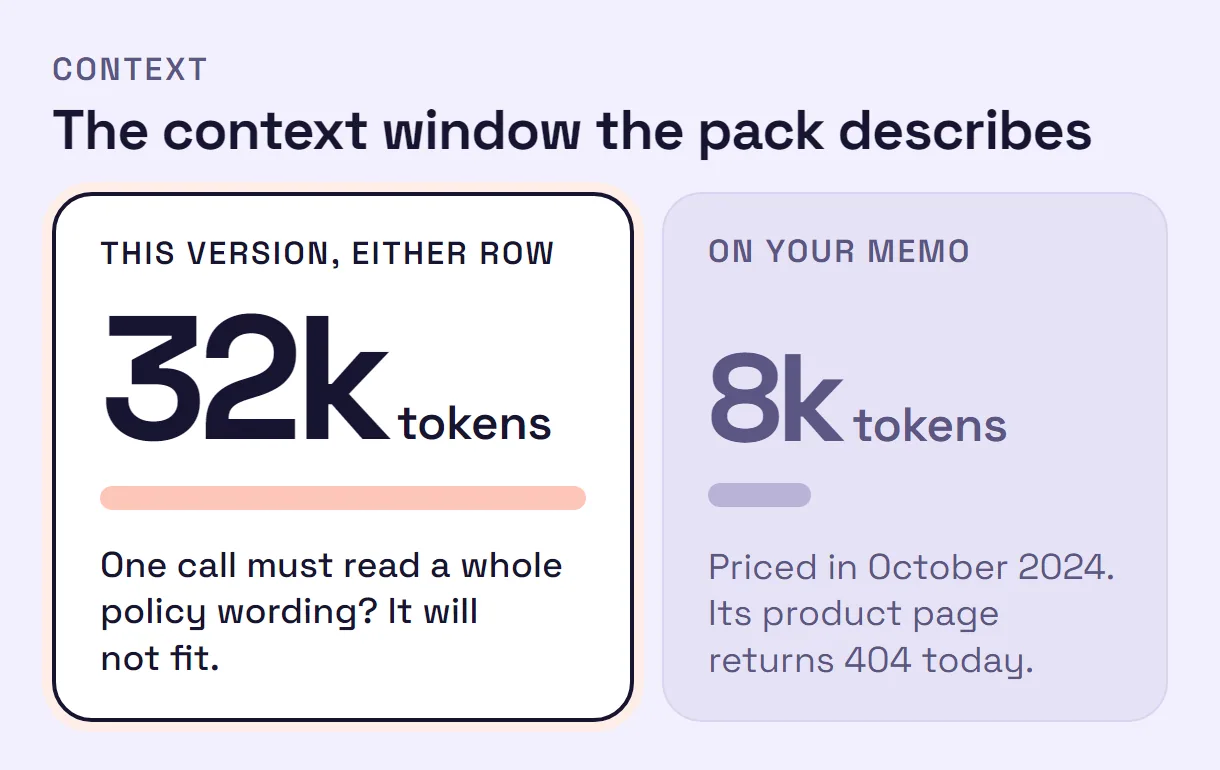
The private-cloud row on your memo was priced in October 2024. Its product page returns 404 today.
Read this first
None of the four changes for a larger contract.
This is for you if
This is not for you if
One image
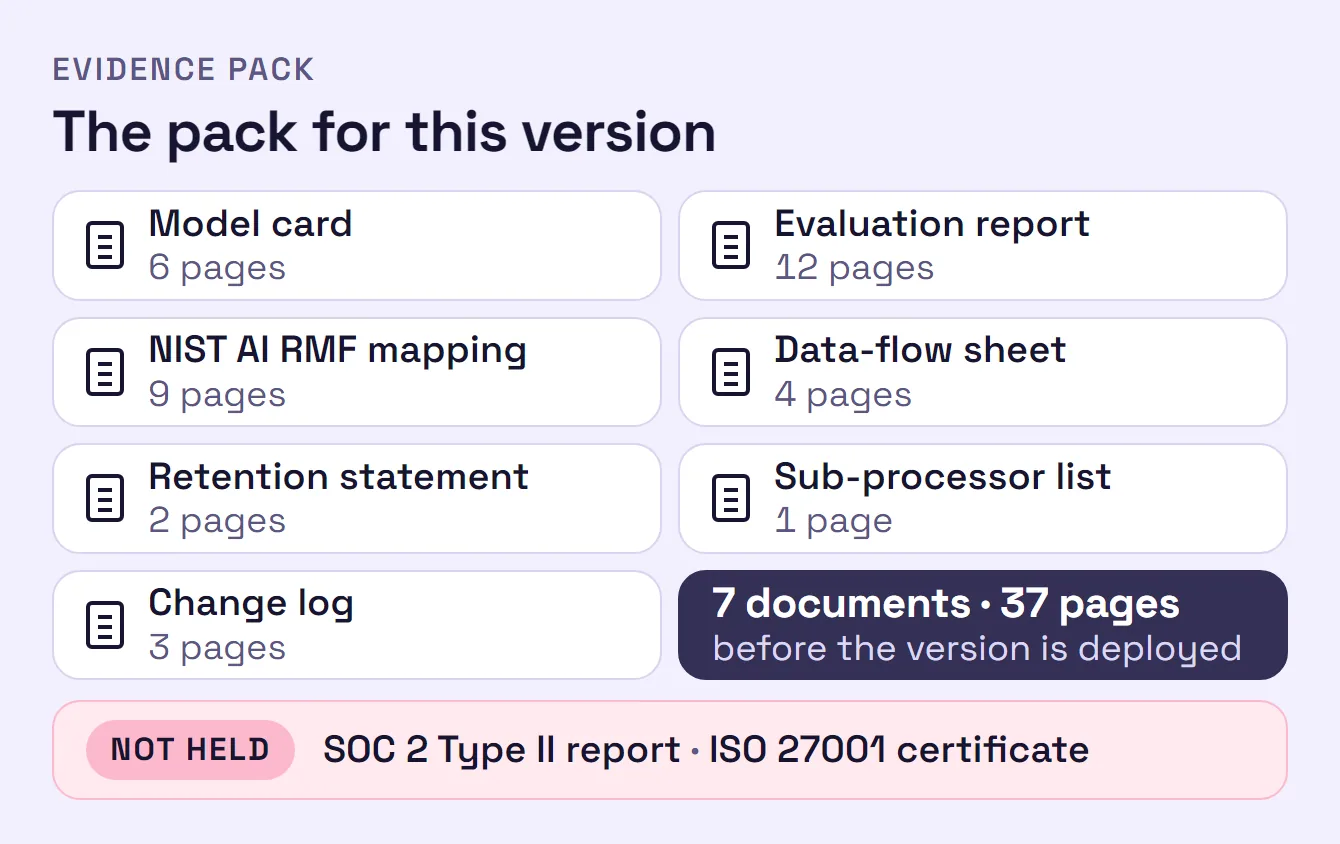
One single-tenant image. The evidence pack describes exactly this and nothing newer.
Weights, runtime and gate rules freeze together.
Drops any action off the allow-list, logged.
Below your threshold, your own reviewer decides.
Token counts per workflow per day. Nothing else leaves.
Kept beside the proposals they corrected, exportable any time.
What the row leaves out
The same six lines hold on both deployments.
The row
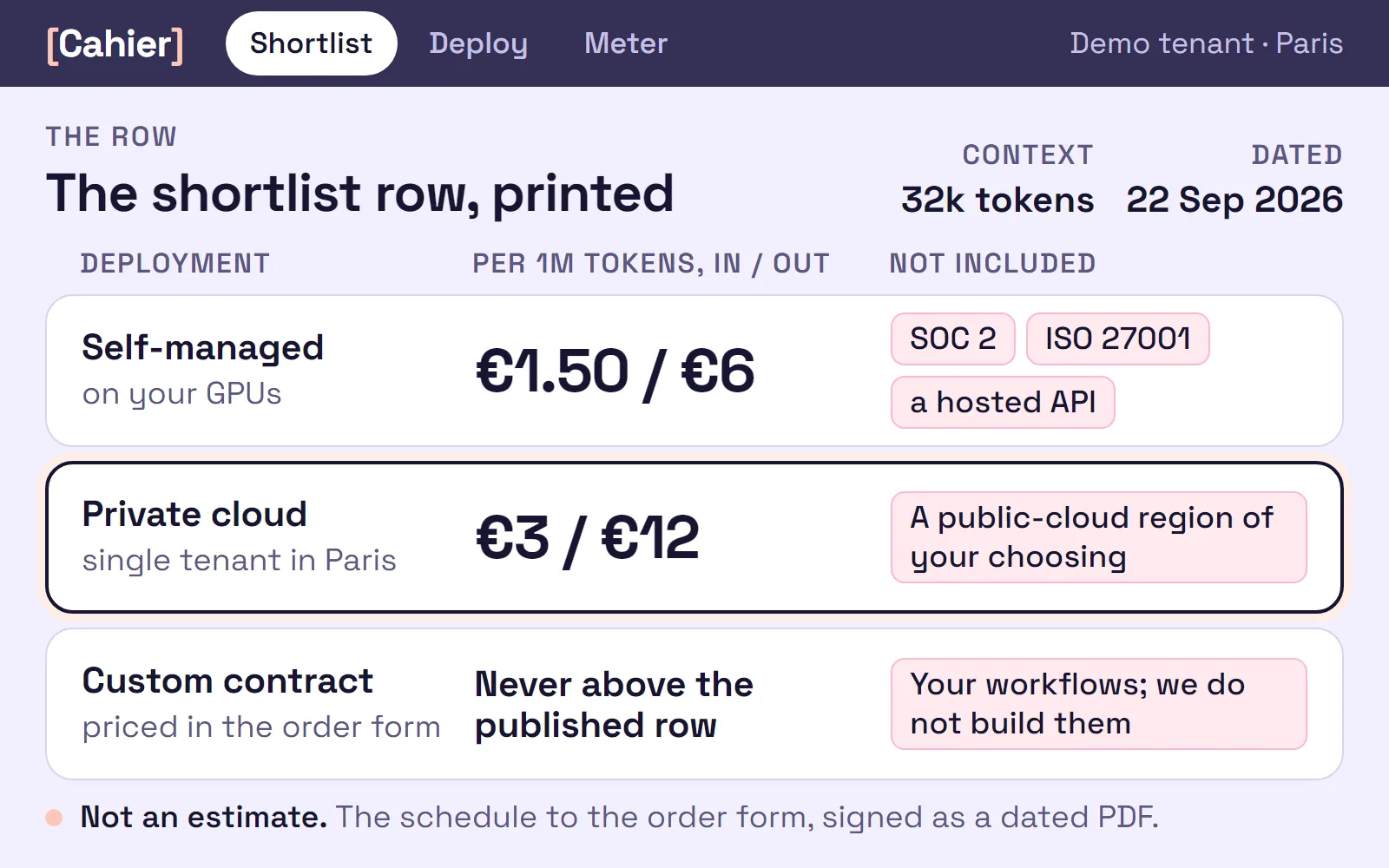
Two deployments and a custom contract, the price and the context on each, and what is left out. Lift it into the memo as it stands.
| Deployment | Per 1M tokens | Context | Governance evidence | Not included |
|---|---|---|---|---|
| Self-managed on your GPUs | $1.50 in / $6 out | 32k tokens | Evidence pack per version, RMF mapping, signed meter | SOC 2, ISO 27001, a hosted API |
| Private cloud in Paris | $3 in / $12 out | 32k tokens | Same pack, plus a sub-processor list naming one Paris host | A public-cloud region of your choosing |
| Custom contract | Never above the published row | 32k tokens | A dedicated fine-tune with its own pack | Your workflows; we do not build them |
Not a price estimate. This is the schedule to the order form, drawn from the same figures the rates state, and signed as a dated PDF.
What is not included gets a column of its own.
UiPath and ServiceNow
The model answers UiPath. The cases it will not decide go to ServiceNow.
Before the pilot
The pilot waits for the board's answer.
Inside a demo tenant
The deployment choice, a week of the signed token meter, the NIST AI RMF mapping, and the first week's four steps.
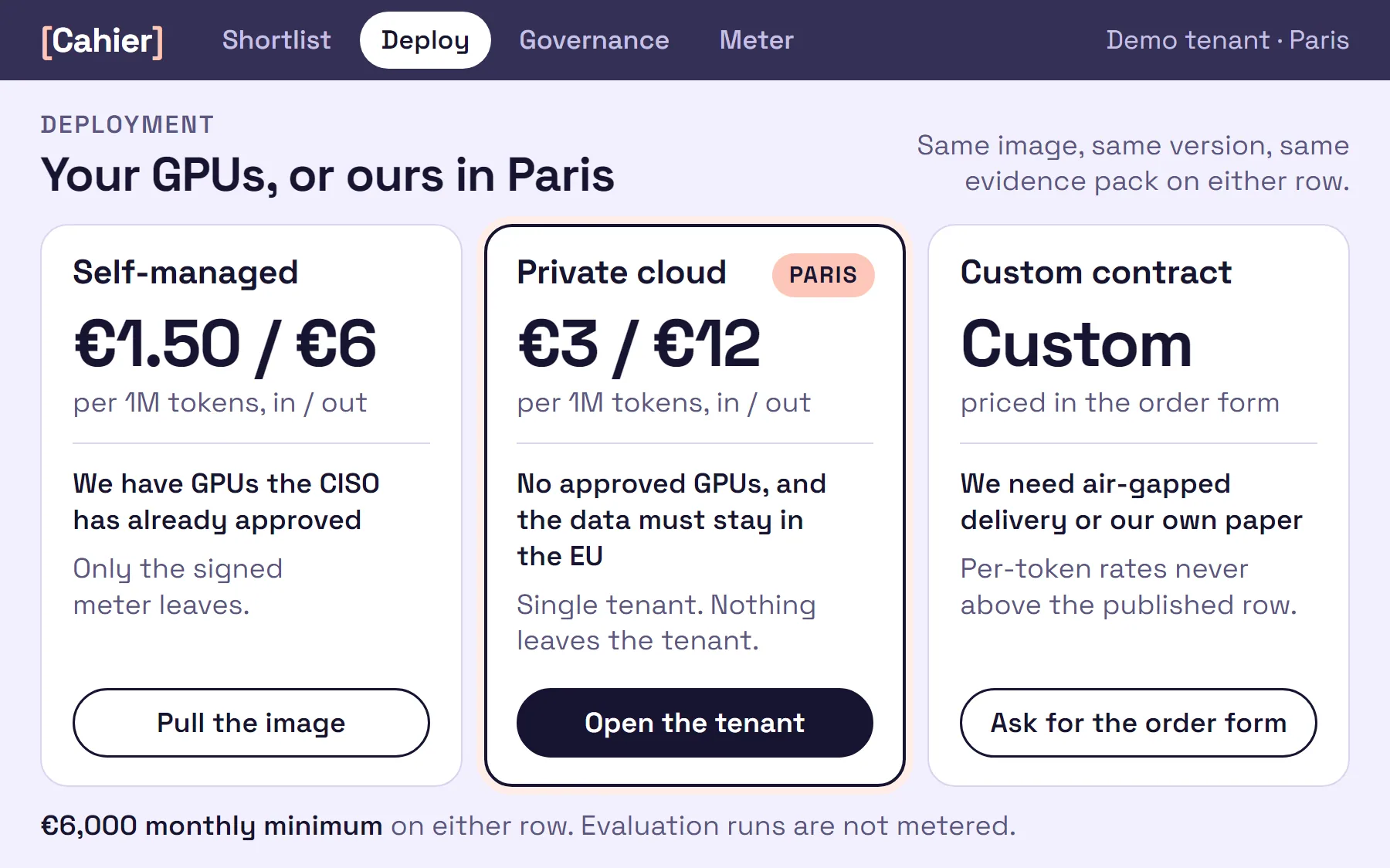
Two deployments and a custom contract, the per-token price on each. Same image, same version, same pack on either row.
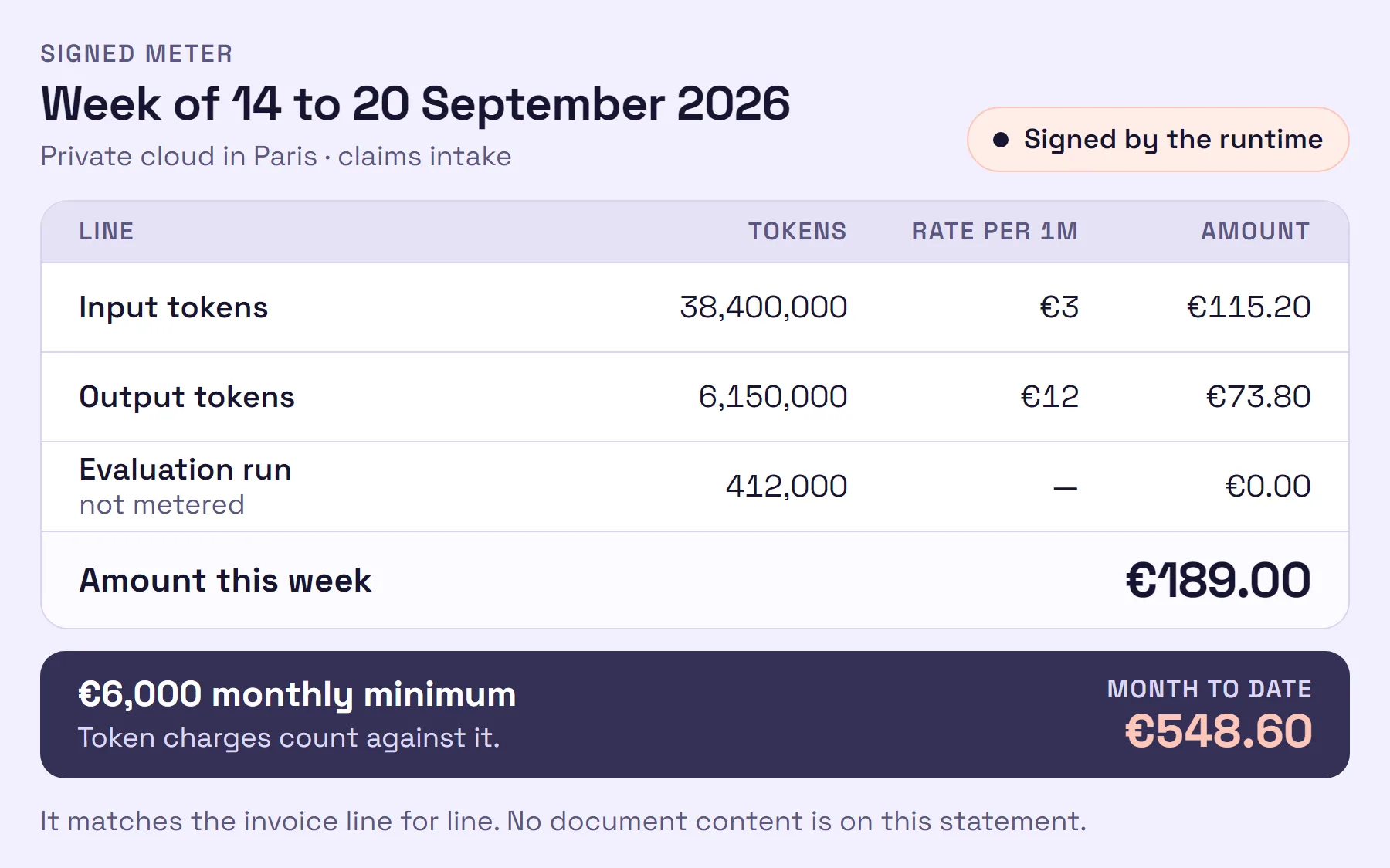
The signed meter for one week: input and output tokens, the rate per million, the amount. It matches the invoice line for line.
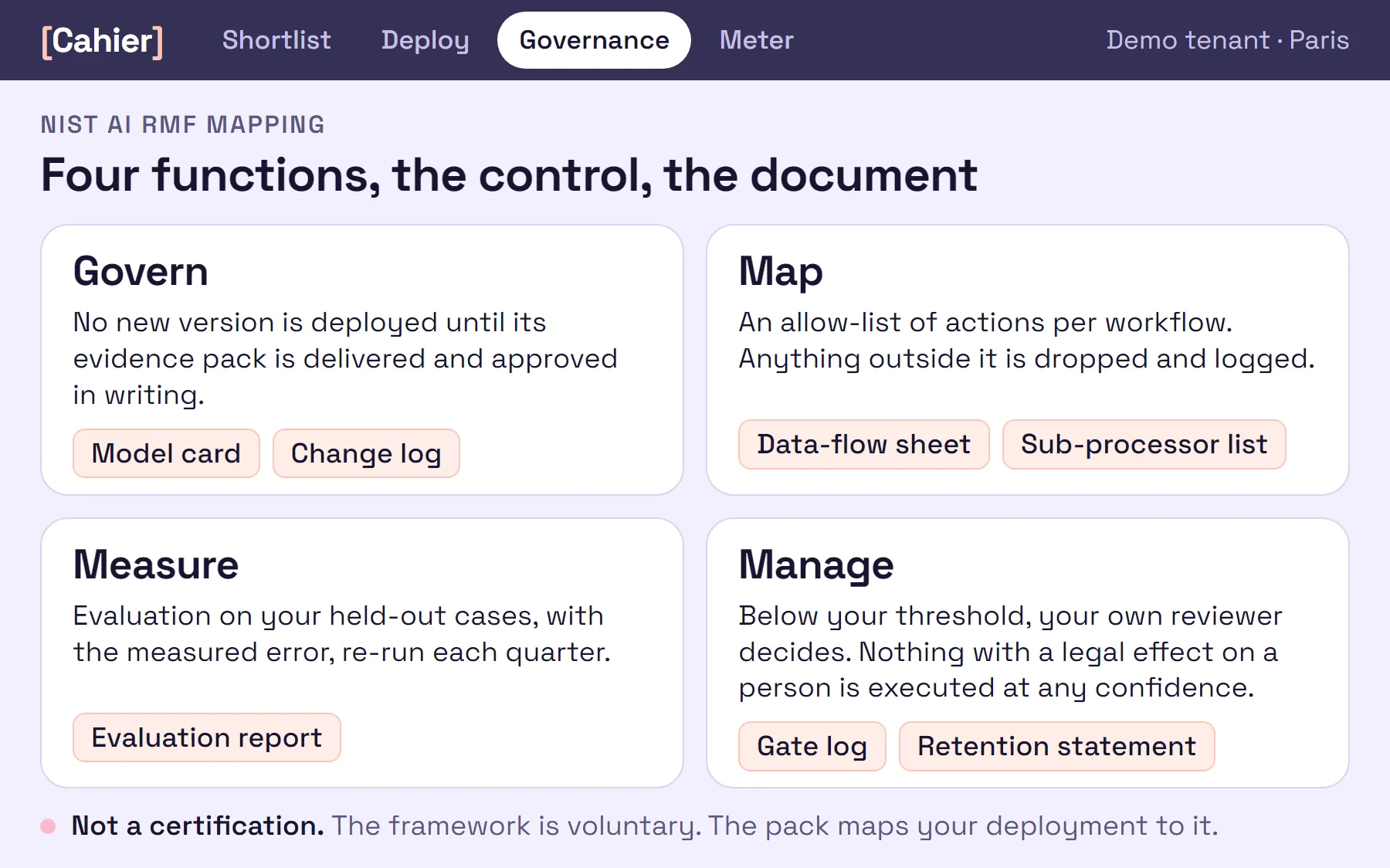
The RMF mapping in the pack: four functions, the control the product supplies for each, and the document behind it. Not a certification.
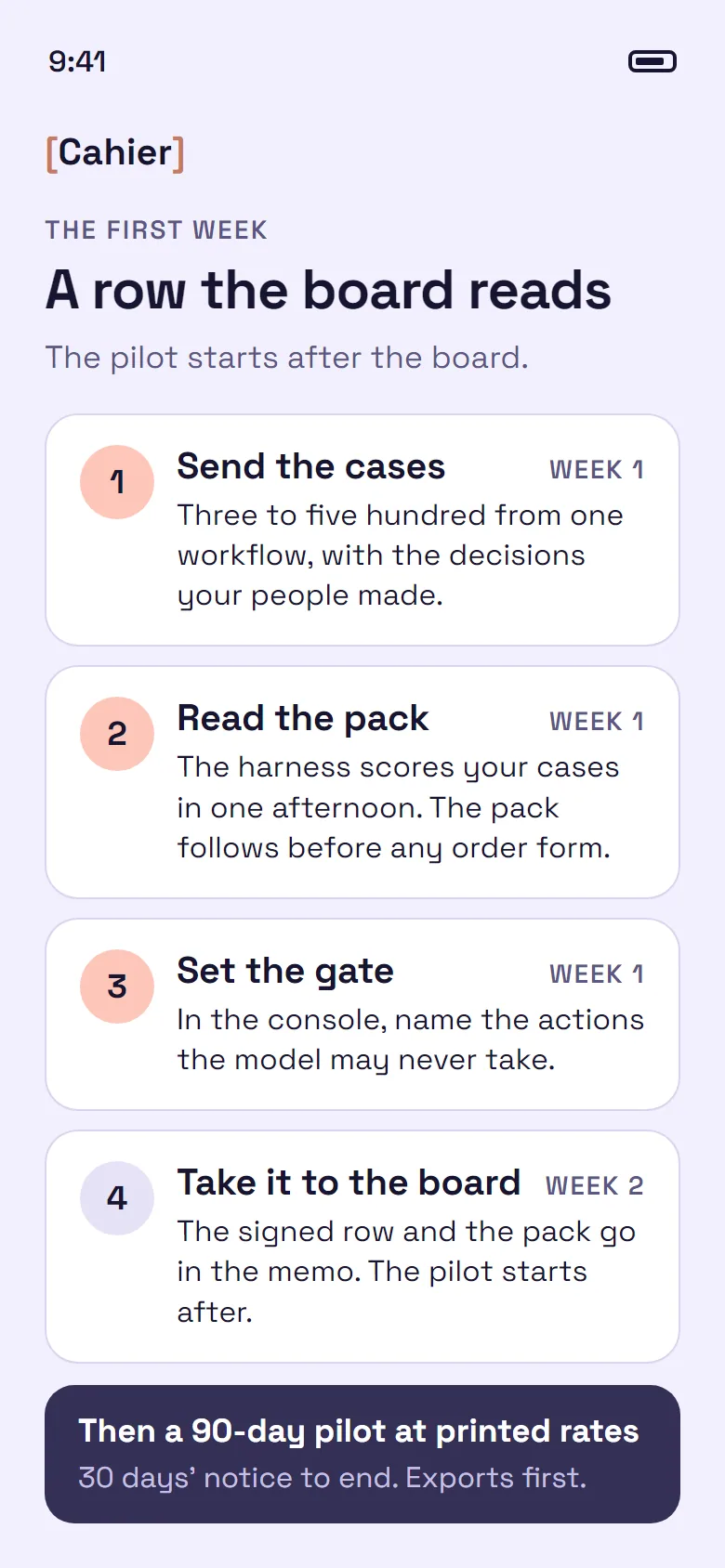
The first week, step by step: cases, pack, gate, board. The pilot starts after the board, not before it.
From the terms
We do not warrant that a proposal is correct.
The measured error on your held-out cases is the warranty.
—Cahier terms of servicethe warranty clause
For the board
Where an answer is about somebody else, it carries a source.
Its page, inflection.ai/enterprise, returns 404, and the July 2026 relaunch names no enterprise customer.
$2.50 per million input tokens and $10 per million output at launch, with an 8k context window.
Cohere North names deployment options and no price. Glean's pricing page names neither and offers a demo.
No. The framework is voluntary. The pack maps your deployment to it and to the Generative AI Profile.
Nowhere. It stays single-tenant on cloud GPU capacity we control in Paris, with one hosting sub-processor.
Yes, on thirty days' notice, and the version stays frozen for the whole pilot.
The rates
Self-managed
$1.50 / $6per 1M input / output tokens
The image on your own private cloud or on-premises GPUs. Only the signed meter leaves. $6,000 monthly minimum.
Private cloudParis
$3 / $12per 1M input / output tokens
Single tenant on cloud GPU capacity we control in Paris. Nothing leaves the tenant. $6,000 monthly minimum.
Custom contract
Custom
Air-gapped delivery, a dedicated fine-tune beyond your own corrections, or a contract on your paper.
Name, work email, phone, country and company, because procurement asks for all five. The first thing we ask for is one workflow's held-out cases.
We reply within one business day.